

Dataceen & Architecture
Please check in on our FAQ section, there are some answers to common questions that might be of interest.
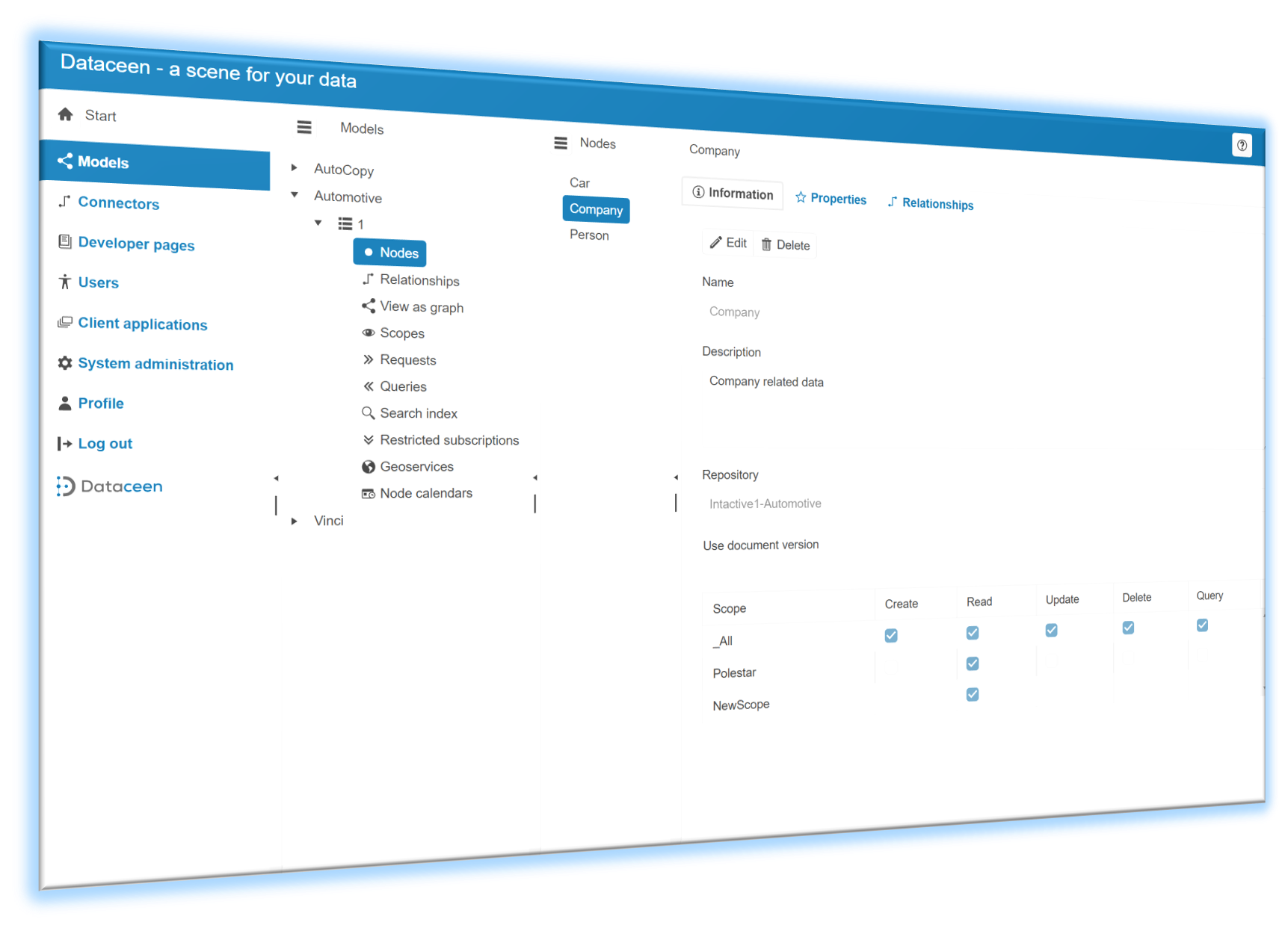
The Business Data Model
The Business Data Model is the core of Dataceen. It defines how business data is structured and connected — independent of where it physically resides. Regardless of how the model is created, the result is always a fully controlled and transparent data structure owned by the enterprise. Models can be created with AI, manually, or through a combination of both. Once defined, Dataceen automatically generates secure APIs, event streams, search indexes, AI-ready MCP servers, and complete documentation.
Learn more about how Dataceen works
Challenges architects face every day
Data integration shouldn't be a full-time job. Yet architects spend most of their time solving the same structural problems over and over.
Fragmented data landscape
Business data is spread across dozens of systems with no unified model. Every integration project starts from scratch.
Months-long integration projects
Each new data need requires custom APIs, security layers, and documentation — all built manually, every time.
Inconsistent security & governance
Access control is implemented differently across systems. There's no single source of truth for who can access what.
How Dataceen fits into your architecture
Dataceen sits as a thin, intelligent layer between your existing systems and the applications that consume data. It doesn't replace anything — it connects everything.
ERP
CRM
BI Tools
Custom Systems
Dataceen
Shared data model · Auto-generated infrastructure
APIs
Security
Search
Documentation
Applications
Dashboards & BI
Partner integrations
Designed for real-world architectures
Dataceen was built by architects, for architects. Here's what that means in practice.
Dataceen doesn't replace your existing systems. It layers on top and makes them work together.
No vendor lock-in. Use your own databases, your own cloud, your own infrastructure.
Setup takes days, not months — even with 30+ connected systems.
Ready to simplify your data architecture?
See how Dataceen can unify your data landscape without disrupting what already works.